

ARCOlisboa 2026 | Opening Lisboa | Booth OP02
Curated programe by Sofía Lanusse, Diogo Pinto & Sofia Montanha
Andrea Davila Rubio | Andrés Rodís
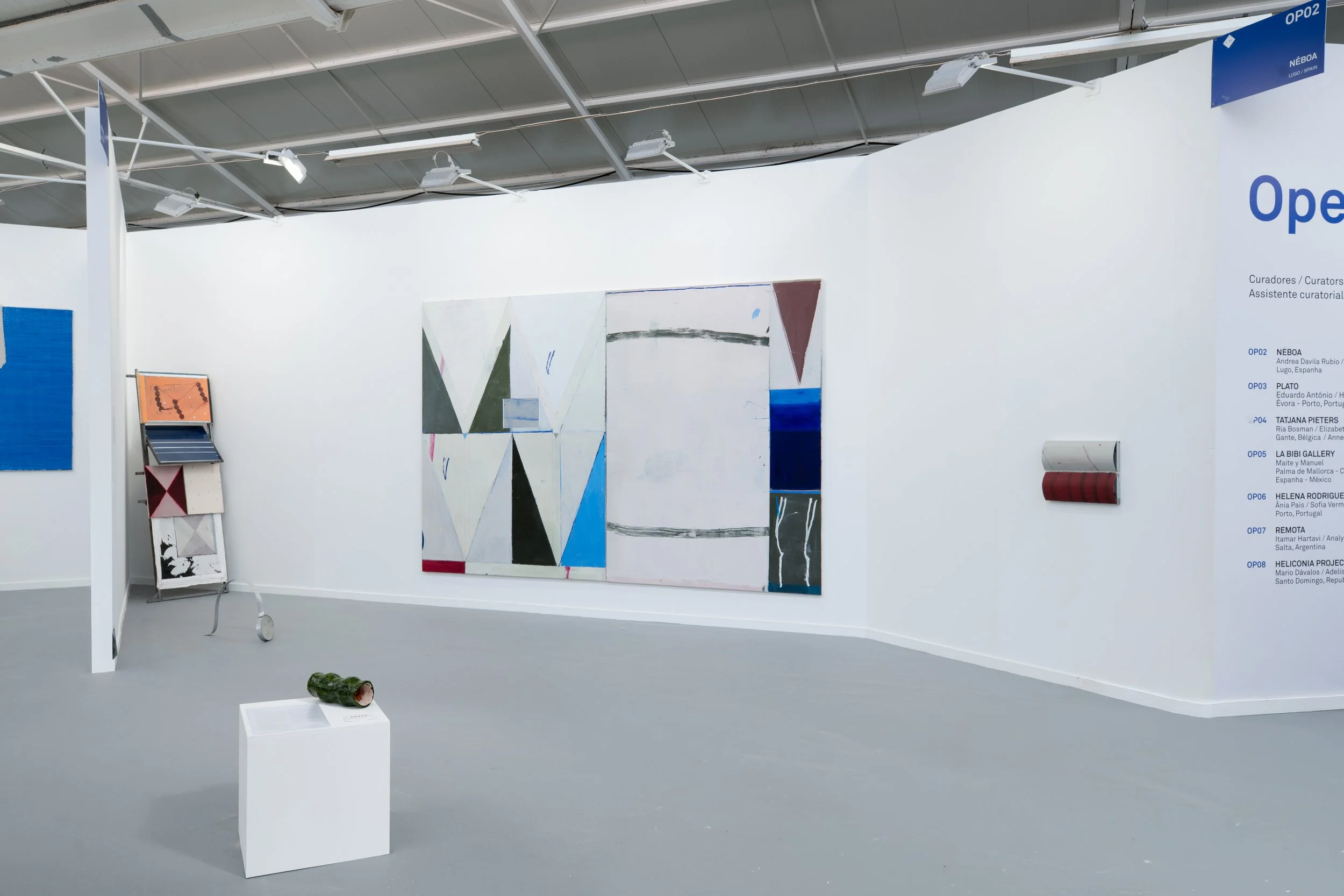
For ARCOlisboa, NÉBOA presents a dialogue between the practices of Andrea Davila Rubio and Andrés Rodís, two young Galician artists whose works examine the surface as a site of inscription, tension and transformation. Though working through distinct formal languages, both artists approach material as something porous and unstable: a place where structures of control, memory and duration become visible.
Andrea Davila Rubio’s sculptural practice approaches the body as a territory shaped by intersecting systems of care, discipline and defence. Developed during her first year at the Institute Art Gender Nature (IAGN) at HGK–FHNW in Basel, her recent works depart from the notion of the “clean look”: the contemporary aesthetic regime of smoothness, uniformity and erased imperfection elevated by wellness and fashion cultures into a normative ideal. Davila Rubio understands this language not as neutral, but as a mechanism of regulation linked to histories of eugenics and to the internalised forms of self-surveillance that structure contemporary life, particularly for female-identifying bodies.
For ARCOlisboa, she presents Clean Look, a sculptural work in glass and aluminium in which facial form appears suspended between exposure and containment. Derived from cosmetic face-mask moulds, the piece evokes the face as a surface to be corrected, sealed and standardised rather than expressed. The industrial precision of aluminium encounters the fragility and transparency of glass, producing an object that oscillates between protection and vulnerability, cosmetic refinement and bodily alienation.
Andrés Rodís’ work unfolds through processes of translation, displacement and measure. His paintings emerge from close observation of vernacular architectures and incidental geometries encountered in everyday spaces: a raised granary marked by painted triangular forms, the diagonal joints of a terrace floor, the improvised brick ventilation patterns of an auxiliary construction. These structures become the starting point for a pictorial language built through repetition, transfer and modulation.
Triangles recur, generating rhombuses, grids and unstable spatial systems that migrate from architecture into the surface of the work. Their proportions are determined by the physical logic of the structures from which they originate — height, centre, span — before being translated onto canvas. Rodís treats painting as an accumulative and permeable field in which gestures, measurements and material traces sediment over time. Oil, enamel, wax and fragments of studio residue coexist as records of a process that remains open, susceptible to interruption and continuation.
Rather than depicting architecture, Rodís carries its measurements into the work itself. The paintings operate as structures in movement: expandable, dilated and contingent, like the joints and triangulations from which they derive. Surface becomes both support and event, holding together fragmentation, memory and duration within a continuously shifting system of relations.
Where Davila Rubio’s work presses against the body and its regimes of visibility, Rodís’ paintings absorb the spatial and material conditions surrounding them. Both practices resist immediacy and fixed legibility. Instead, they ask what a surface can contain, how form accumulates experience, and how looking might become a sustained encounter with processes that are still unfolding.
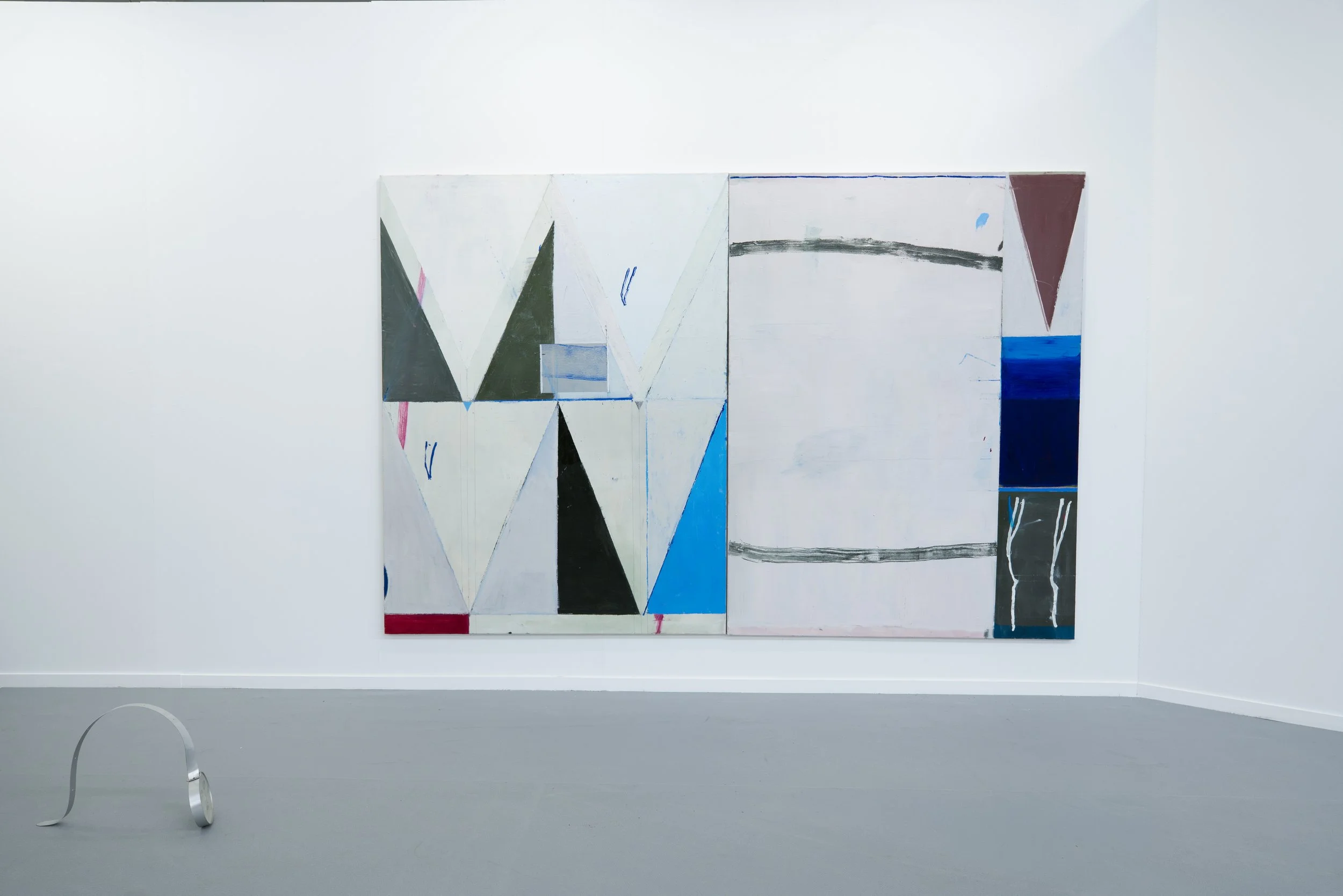
Andrés Rodís
S/T, 2026. Óleo sobre tela | Oil on canvas. 200 x 300 cm
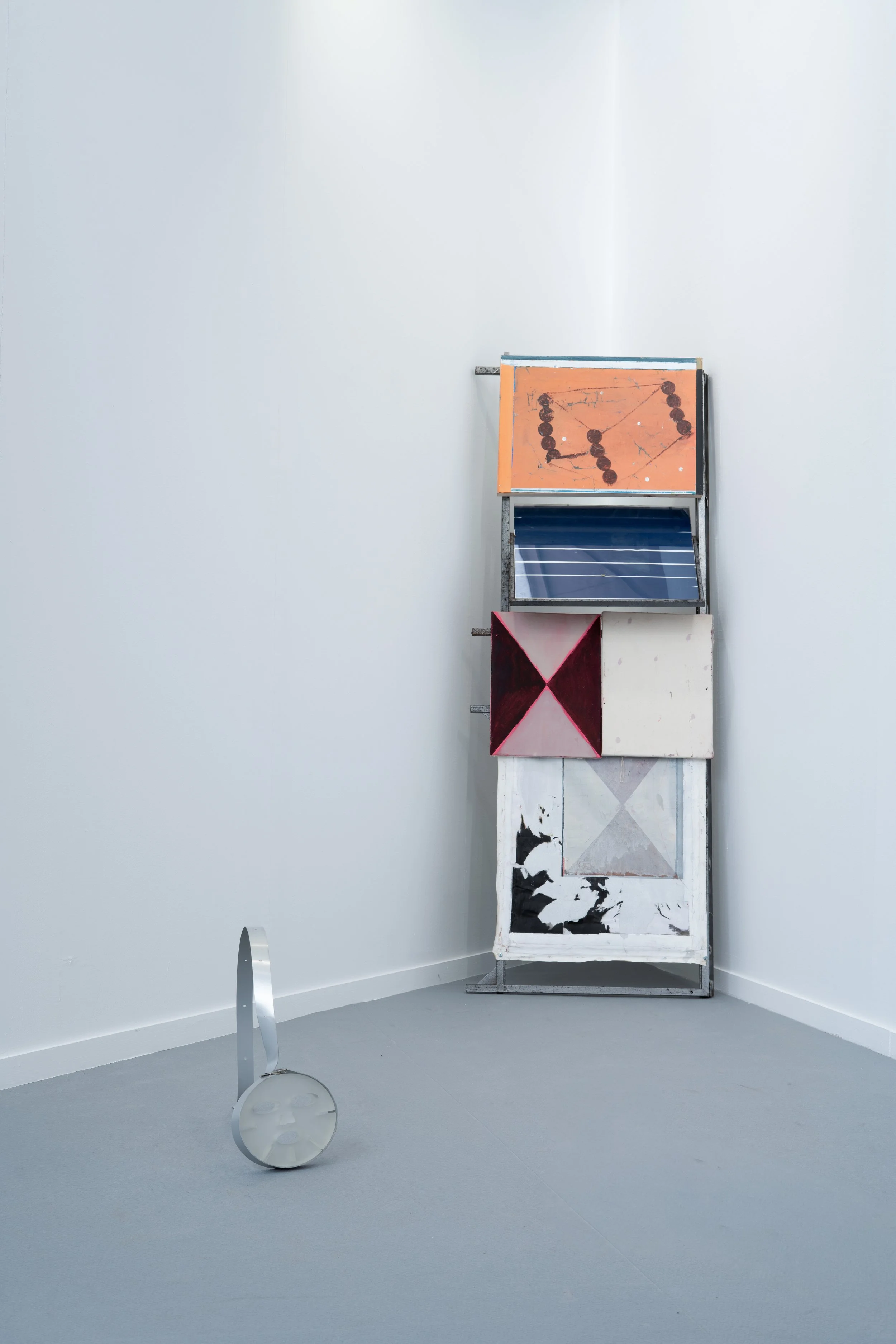
Andrés Rodís
S/T, 2026. Técnica mixta | Mixed technique variable dimensions
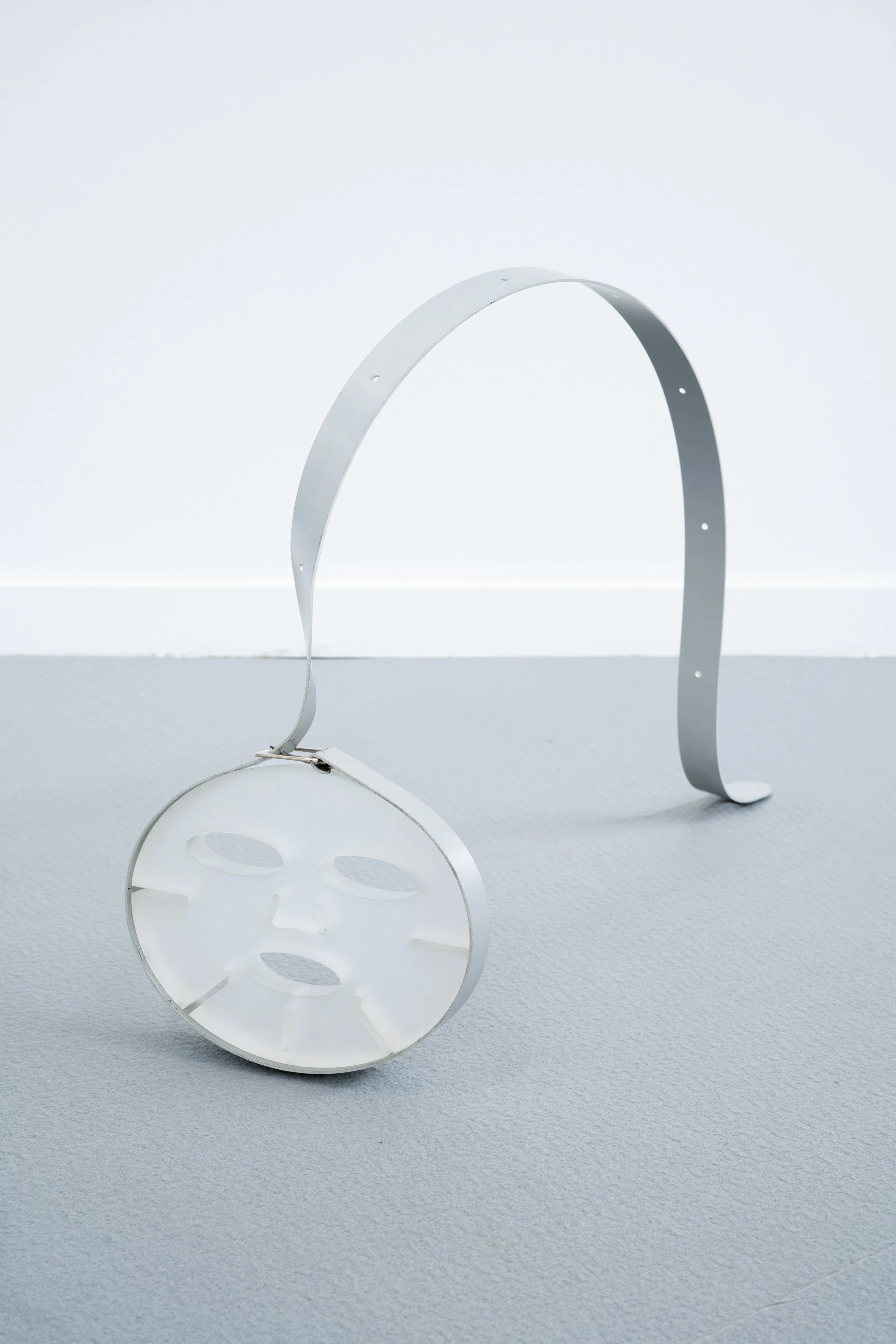
Andrea Davila Rubio
Clean Look, 2026. Vidro e aluminio | Glass and aluminium 20 × 20 x 3 cm
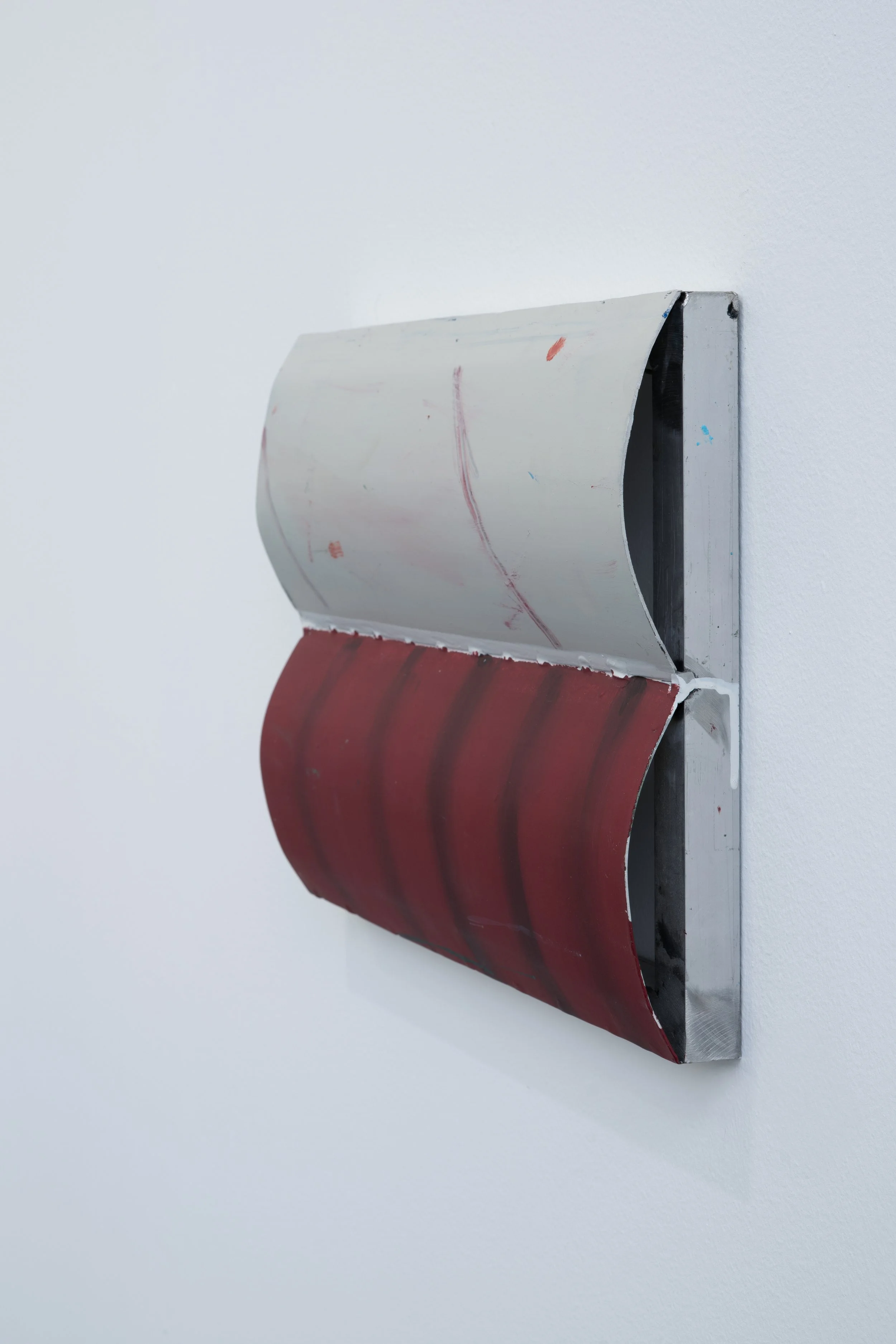
Andrés Rodís
S/T, 2026. Esmalte y ceras sobre aluminio | Enamel and waxes on aluminium
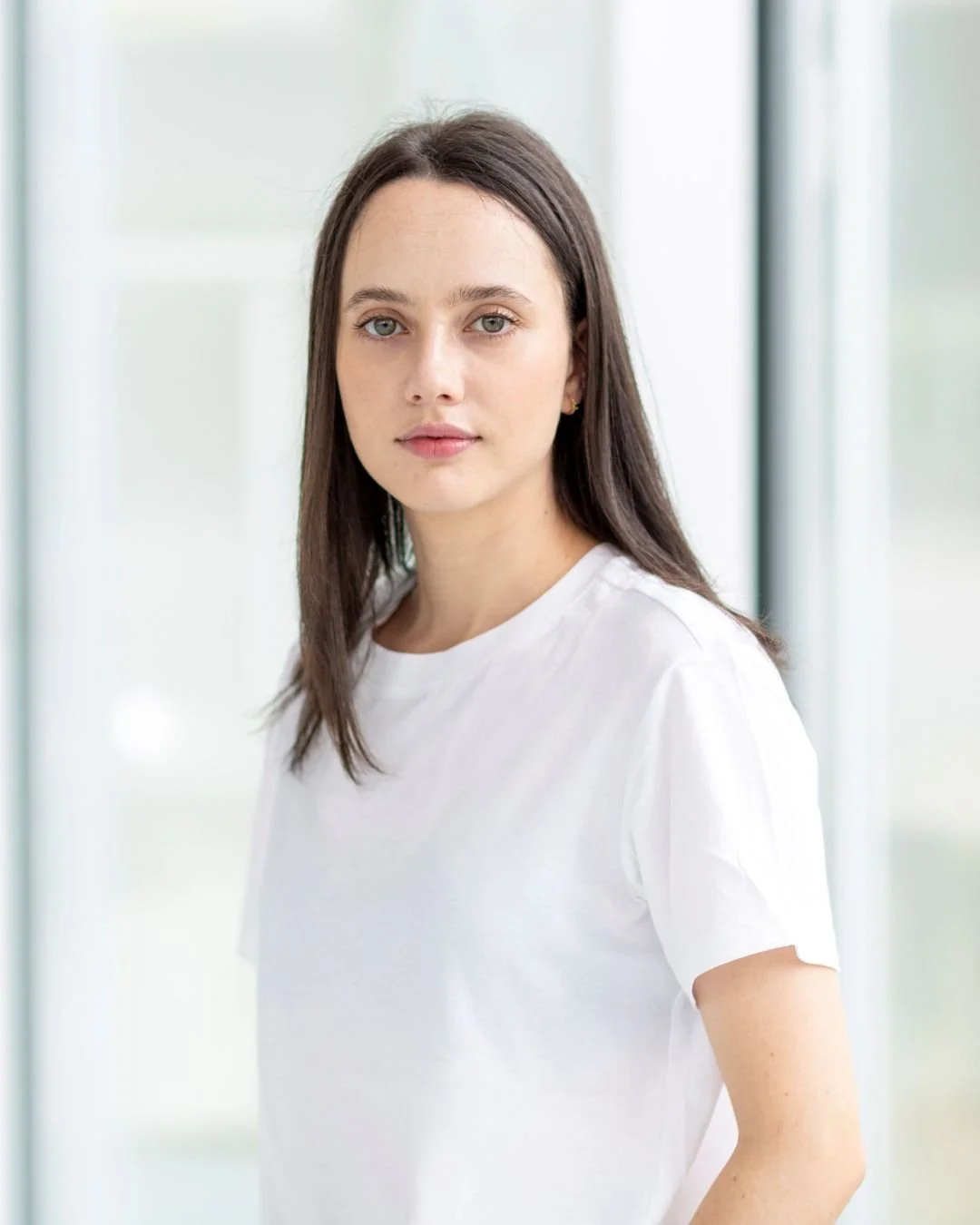
Andrea Davila Rubio (Boiro, Spain, 1995) holds a PhD in Creation and Research in Contemporary Art from the University of Vigo (2025). In 2021, she completed part of her predoctoral research training at the Department of Philosophy at Boston College (Boston, USA), supported by a Fulbright–Xunta de Galicia scholarship. In addition, in 2025 she was awarded a grant by the María José Jove Foundation Art Centre to undertake the Master of Fine Arts programme at the Institute Art Gender Nature (IAGN) of HGK–FHNW University in Basel (Switzerland) during the 2025–2027 academic years.
From a critical and situated perspective, her work proposes a break with traditional hierarchies between the human and the non-human, putting forward forms of coexistence and care in which the body and its environment share the same logic of mutual transformation. Through her practice, the artist explores how sculpture can become a way of being in the world, and how the body is capable of activating affective and material bonds when it intertwines with elements of the landscape as well as with aspects of everyday life.
In her works, the body leaves traces, but is also shaped by what it touches, becoming a living surface that both receives and allows itself to be affected. Her most recent production delves deeper into this connection between body and matter, proposing new ways of imagining interspecies coexistence through artistic practice.
Selected exhibitions include: A sweaty dispersal into the fog, Galería NÉBOA (Lugo, 2025); A Friend of a Friend of a Friend, der TANK (Basel, Switzerland, 2025); A que me refiero cando falo de corpo, Sarao Studio (Ferrol, 2025); Algo que brilla… ao final do bosque, Bienal de Arte Contemporánea, Fundación Sales (Vigo, 2024); atravesar o xardín / entre as dúas esquinas, Feira de Arte Culturgal (Pontevedra, 2023); Corpo, afectos, territorio, Centro de Arte Contemporáneo de Huarte (Pamplona, 2023); Snapshots de Chantada, Os Casares, Galería Vilaseco (Lugo, 2022); Centro Cultural Marcos Valcárcel (Ourense, 2022); Feira de Arte Culturgal (Pontevedra, 2021); Novos Valores, Museo de Pontevedra (Pontevedra, 2020).
She has also undertaken artist residencies at the Walter & Nicole Leblanc Foundation in Brussels (Belgium); the Matadero Madrid Artist Residency Centre, supported by the Provincial Council of Pontevedra in collaboration with the 32nd Pontevedra Art Biennial; Atelier Mondial in collaboration with the Institute Art Gender Nature (IAGN) at HGK Basel (Switzerland) through the international arts programme of the Museo de Pontevedra; 12Miradas at Galería Vilaseco in collaboration with the María José Jove Foundation (Lugo, 2021); and Residency Unlimited (New York, 2021). In 2025, she was awarded the Celestino Cuevas Artist Residency Prize at Artesantander through Galería NÉBOA. She has also received grants and awards from the University of Vigo (predoctoral grant, 2020–2023), the Provincial Council of A Coruña (research grant, 2023–2024), the Provincial Council of Ourense (First Prize, 16th Fine Arts Competition, 2021) and the Provincial Council of Pontevedra (Prize, Novos Valores Fine Arts Competition, 2020).
Her works form part of the collections of the Provincial Council of Ourense and the Provincial Council of Pontevedra.
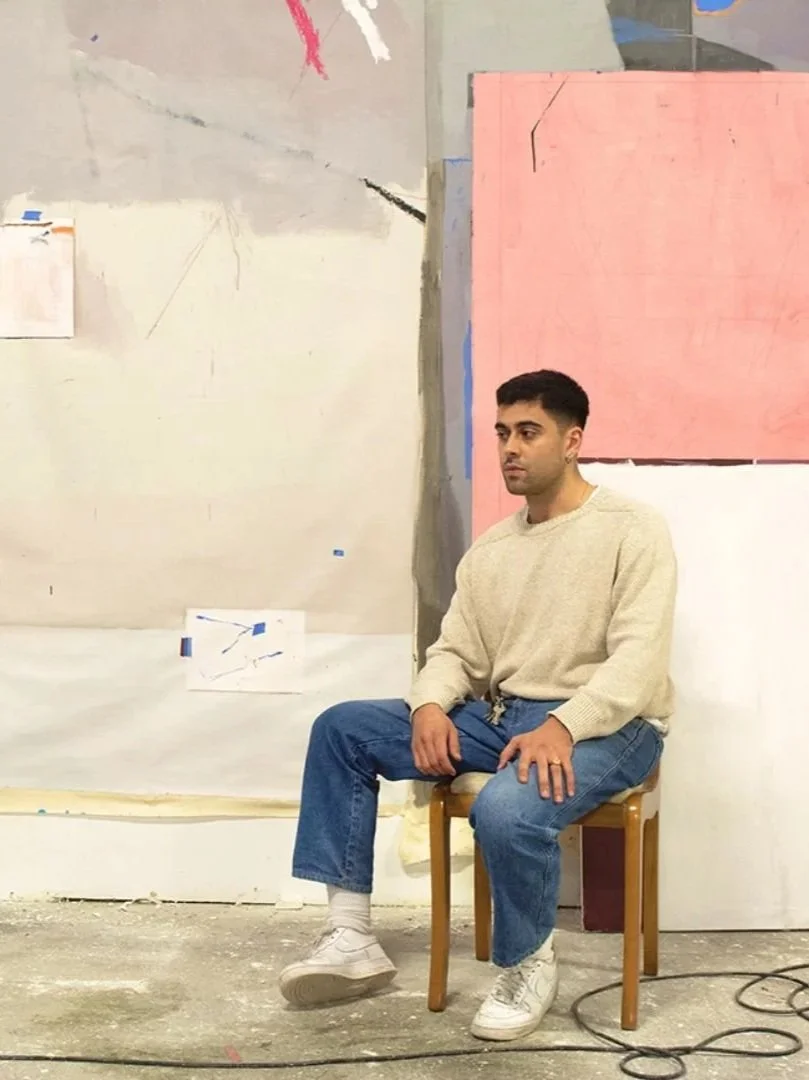
Andrés Rodís(Santiago de Compostela, Spain, 2000) develops his artistic practice between Galicia, Valencia and the Basque Country. His work stems from a plastic investigation into language, the pictorial surface and the construction of images, often approached from a conceptual and process-based perspective.
He holds a BA in Fine Arts from the Polytechnic University of Valencia (2022) and an MA in Research and Creation in Art from the University of the Basque Country (2024). He is currently undertaking doctoral studies at the University of Vigo and has been artist-in-residence at Piramidón Centre d’Art Contemporani (Barcelona, 2025) and at the Celestino Cuevas Artistic Residencies (Reinosa, 2025).
In recent years, he has received several distinctions, among them being a finalist for the 14th Auditorio de Galicia Prize for Emerging Artists (2025), the Premio Gaztea awarded by the City Council of Leioa (2024), and the Cátedra Bodegas Faustino & Willy Ramos Award (Paris, 2022) for his project Luz negra. He was also a finalist in the Xuventude Crea competition (2020 and 2021) and selected for the Encontro de Artistas Novos EAN11 at the Cidade da Cultura de Galicia, coordinated by Rafael Doctor.
Selected exhibitions include Isabelle Dinoire at Espacio Peculiar (Oleiros, A Coruña, 2025); Gramática de superficie at Galería NÉBOA (Lugo, 2024); Territorio Contemporánea 2025, ABANCA (Santiago de Compostela, 2025), the group exhibition of awardees of the Cátedra Faustino & Willy Ramos at Galería Lupe Fullana (Valencia, 2023); XXVI Certamen Jóvenes Pintores at Fundación Gaceta (Salamanca, 2023); Paisaxe_0 at Galería Metro (Santiago de Compostela, 2022); La imagen de la memoria at Biblioteca Azorín (Patraix, Valencia, 2022); Xuventude Crea at the Church of the University (Santiago de Compostela, 2021); and Hidden Sessions with the collective Orbis Vacui at Centro Cultural Escuela de Ruzafa (Valencia, 2020). In 2024, he was selected for the exhibition PLURI-IDENTITATS. IV Convocatòria Biennal d’Arts Visuals at the Museu de la Universitat d’Alacant (Sala Sempere, 2025), as well as for the group show Tres o Cuatro Metros, organised by UPV/EHU in collaboration with the Juntas Generales de Bizkaia.
His work is represented in both public and private collections, including the Colección Norte of the Government of Cantabria, Fundación Campocerrado, and KELLS Art Collection.